A small, sweet-natured dairy breed that fits almost any backyard — and gives some of the richest milk you'll ever taste. Here's what we've learned raising them at Amen Farms.
The Nigerian Dwarf is a miniature dairy goat — all the personality and productivity of a full-size dairy breed in a package that stands about knee-high. That combination is exactly why they've become one of the most popular goats in the country, and why they're the heart of our herd.
Nigerian Dwarves trace back to small West African goats brought to the United States generations ago. Bred up carefully into a true miniature dairy goat, they're now a recognized breed with the American Dairy Goat Association (ADGA) and are shown right alongside the standard dairy breeds.
A grown Nigerian Dwarf doe usually stands about 17 to 21 inches at the shoulder and weighs roughly 50 to 75 pounds — small enough for a child to lead, sturdy enough to thrive outdoors. They come in nearly every color and pattern you can imagine, from solid gold to bold spots and frosted ears, and many have striking blue eyes. Their ears stand upright and alert, which is one of the quickest ways to tell them apart from our Mini LaManchas, with their tiny ears.
This is the breed's calling card. Nigerian Dwarves are friendly, curious, and easy to handle — gentle enough for families and first-time goat owners, and playful enough to keep you laughing. Raised with regular handling, they grow up genuinely fond of people. (Ours are spoiled rotten, and it shows.)
For their size, Nigerian Dwarves are remarkable milkers. Their milk is famously sweet and rich, with the highest butterfat of any dairy goat breed — which makes it lovely for drinking and ideal for cheese, soap, and other homestead projects. A good doe in milk can keep a family in fresh milk without the space, feed, or hauling that a full-size goat would ask of you.
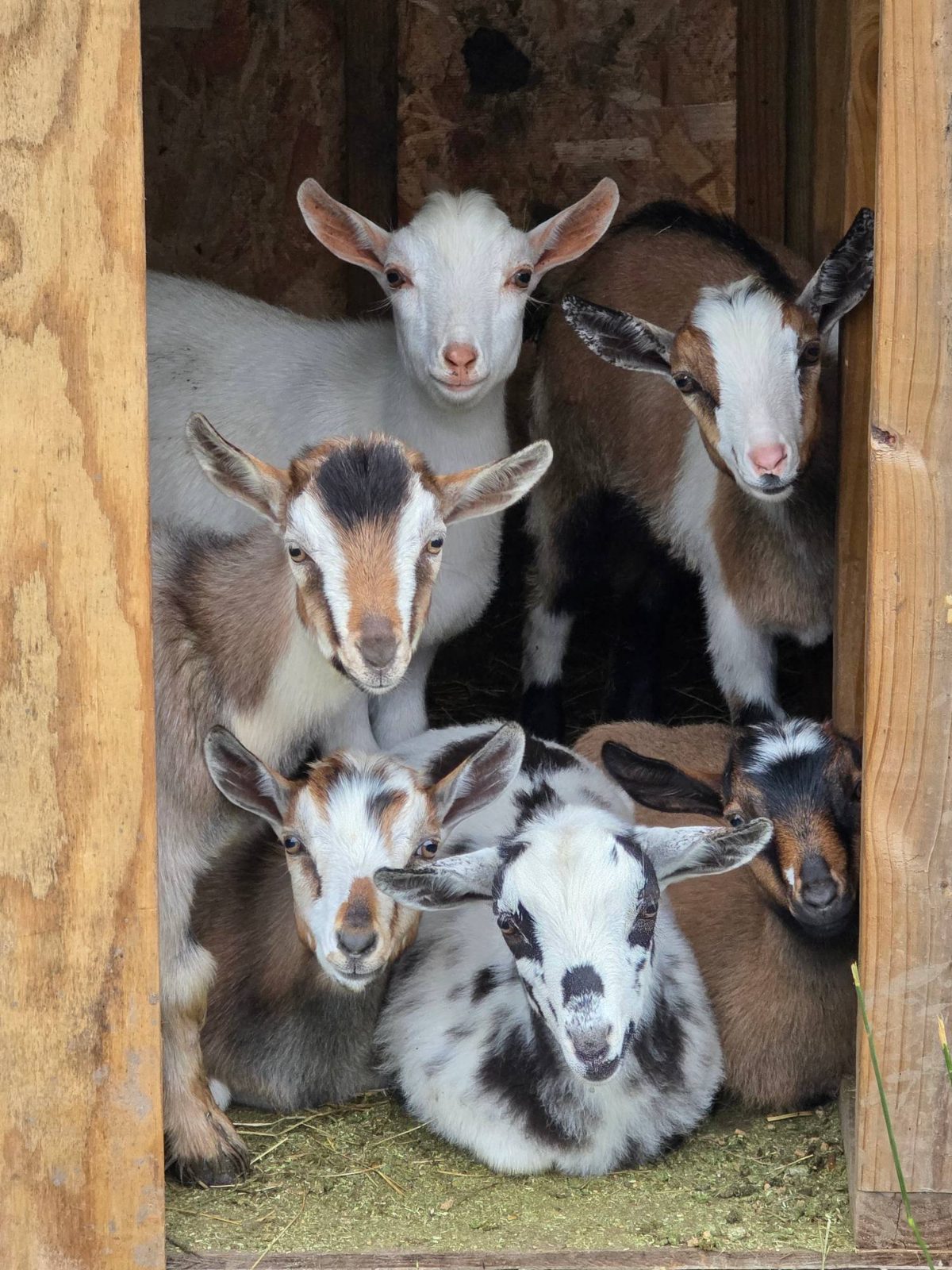
Because they're small, hardy, and productive, Nigerian Dwarves fit a lot of different homes:
Goats are hardy animals, but a few basics keep them healthy and happy. None of it is complicated, and we're glad to walk any new owner through it.
The single most important rule: goats are herd animals and are never happy alone. Plan on at least two — a lonely goat is a loud, stressed, escape-prone goat, while a pair keeps each other calm and content. It's exactly why we ask that a brand-new herd start with at least two, and it's baked into our bundle pricing.
They need a dry, draft-free place to get out of the rain and wind — nothing fancy; a three-sided shed does the job. Good fencing matters more than people expect: goats are clever and curious, and a Nigerian Dwarf can slip through a surprisingly small gap. Sturdy woven-wire field fence is a reliable choice.
Most of a goat's diet is forage — pasture browse and good grass hay — plus loose goat minerals offered free-choice and constant access to clean water. Milkers and growing kids may need a little grain, but goats need far less than people think, and too much of the wrong feed causes more problems than it solves. (Despite the cartoons, goats are picky browsers, not garbage disposals.) Wethers and bucks in particular should be kept off heavy grain, which can lead to painful urinary stones — a feed-and-mineral balance your vet or feed store can help you get right.
A simple routine keeps a herd thriving: the annual CD&T vaccination, hoof trimming every few weeks, and deworming as needed for your area and your vet's guidance. Every goat is a little different, so a good local goat vet is worth finding before you need one. Every goat that leaves our farm is already current on its care, with an honest rundown of its history.
If a couple of friendly Nigerian Dwarves sound like the right fit, we'd love to help. Our kids grow up underfoot and well-socialized, we keep a closed, healthy herd, and our does and bucks are ADGA registered — so you know exactly what you're bringing home. Come sit in the pasture and let one pick you.
Want a slightly bigger goat with the calmest disposition around and famously tiny ears? Meet our Mini LaManchas.